
Invite Speaker I:
"A Look inside the Flow: 3D Tomographic Imaging of Reacting and Non-reacting Flows "
Abstract: Understanding complex fluid flows, including energy conversion systems, requires measurements that capture their inherently three-dimensional, turbulent, and often unsteady nature. However, many conventional diagnostics provide only two-dimensional information, limiting our ability to fully resolve the underlying flow structures and processes. This talk presents three-dimensional (3D) tomographic imaging approaches developed by the Tomography group at the Institute for Energy and Materials Processes (EMPI) at the University of Duisburg-Essen. By combining optical measurement techniques with tomographic reconstruction algorithms, these approaches enable the extraction of spatially resolved 3D information from both reacting and non-reacting flows. Examples will demonstrate applications using individual measurement techniques, such as emission-based imaging and background-oriented schlieren tomography, as well as combined approaches where concurrent measurements are used. The latter is enabled through the TIMes concept (Tomographic Imaging using Multi-simultaneous measurements), which provides complementary information from the flow region and time instant, and allows deeper insight into complex processes.
Bio-Sketch
Prof. Dr. Khadijeh Mohri leads research on advanced three-dimensional (3D) optical diagnostics for complex fluid flows at the University of Duisburg-Essen, Germany. She received a First-Class Honours MEng degree in Aerospace Engineering from Queen Mary University of London and a PhD in Aerospace Engineering from Imperial College London. Her research focuses on 3D tomographic imaging of reacting and non-reacting flows, including background-oriented schlieren tomography, laser-based diagnostics, and multi-modal measurement techniques. Her research has resulted in numerous peer-reviewed publications in the areas of optical diagnostics, combustion, and 3D flow imaging. Prof. Mohri is actively involved in the international scientific community through international research collaborations, editorial activities, and professional service. Her roles include serving as an editorial board member of Progress in Energy and Combustion Science, leading competitively funded research projects, and contributing as a member of the Women in Combustion Committee of the Combustion Institute.
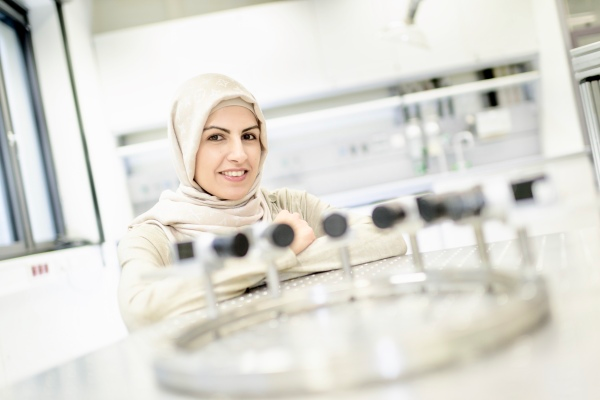
University of Duisburg, Germany
Invite Speaker II:
"Balancing Control of Unstable Systems "
Abstract: Several systems are unstable in their natures. In the unstable systems, one or more poles of their characteristic equations lie on the right half of the complex plane. Dynamic control of unstable systems is a challenged topic for any control engineers. Several control algorithms have been proposed to stabilize unstable systems. In the presentation, several unstable systems are introduced as platforms to test control performance including inverted pendulum systems, ball riding robots, bicycle robots and unicycle robots. Different types of inverted pendulum systems including moving-cart, rotary, x-y planar, several-link inverted pendulum are classical platforms used in balancing control. Ball riding robot, or ballbot, has a robot riding on a spherical ball. Several driving mechanisms are applied to control robot motion and balancing on horizontal planes. AIT has introduced a double-level ballbot which has a ballbot on top of another ballbot. Bicycle robot is a bicycle which balances itself using some mechanisms. Mass balancing, centrifugal force balancing, and gyroscope balancing are widely used to balance the bicycle robots. Unicycle robot balancing requires both longitudinal and lateral balancing control. The robot is highly unstable. Both longitudinal and lateral planes are coupled which make unicycle robot balancing become very difficult.
Bio-Sketch
Manukid Parnichkun is currently the vice president for academic and research (VPAR) at the Asian Institute of Technology (AIT) and a professor at the Mechatronics and Machine Intelligence at the same institute. He received B.Eng. from Mechanical Engineering, Chulalongkorn University in 1991, M.Eng. and Ph.D. from Precision Machinery Engineering, the University of Tokyo in 1993 and 1996 respectively. He joined Asian Institute of Technology as an assistant professor in 1996. He was promoted to Associate Professor in 2001, and professor in 2016. He supervised and graduated 25 doctoral students, and more than 200 master students. He was the founding committee of the Thai Robotics Society (TRS) and later became editor-in-chief of the society journal. He was elected to be the president of the Thai Robotics Society during 2003-2005. He organized and chaired several conferences including IEEE ICIT, IEEE ROBIO and several robot competitions including Thailand Intelligent Vehicle Challenge, BicyRobo Thailand Championship, ABU Robocon Thailand Championship. His research interests are Mechatronics, Robotics, Control, and Measurement.
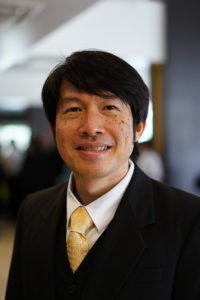
Asian Institute of Technology, Thailand